




Cart
0

Indian textiles have always carried more than fabric and thread. They carry memory, devotion, and centuries of craftsmanship passed down through generations of artisans. Among the many saree traditions that have found a renewed place in modern wardrobes, the Pichwai saree holds a special spot. It blends temple art with textile design, turning six yards of fabric into a story you can wear.
If you have recently come across the term "Pichwai saree" while scrolling through ethnic wear collections and wondered what it actually means, where it comes from, and how to know if the one you are buying is genuine, this guide answers all of that in detail. At Kawaii, we work closely with this art form, so we wanted to put together a clear, honest explainer for anyone exploring Pichwai sarees for the first time.
What is the Meaning of a Pichwai Saree?
The word "Pichwai" comes from two Hindi words: "pich," meaning behind, and "wai," meaning hanging. Together, they describe a hanging that is placed behind something, in this case, behind the idol of Shrinathji, a child form of Lord Krishna worshipped in the temples of Rajasthan. Traditionally, Pichwai was not a saree at all. It was a large cloth painting hung behind the deity in temple sanctums, changed according to the season, festival, or specific ritual being observed that day.
These paintings were created by hand using natural dyes and fine brushes, often taking weeks or months to complete. The imagery was rich and symbolic: lotus ponds in full bloom, cows grazing peacefully, peacocks with their feathers fanned out, and Krishna himself depicted in various divine moods. Every element had a purpose. The cows represented abundance and devotion, the lotus symbolised purity, and the peacock stood for grace and beauty.
Over time, this temple art form moved beyond cloth hangings and found its way onto sarees. Designers and weavers began translating the same motifs, the same storytelling, and the same devotional themes onto saree fabric. A Pichwai saree, therefore, is essentially a saree that carries this temple-inspired artwork, either hand painted, block printed, or woven, depending on how it is made.
So when someone asks what a Pichwai saree means, the simplest answer is this: it is a saree that wears temple art. It is not just a printed pattern picked for its colours. Each motif on a genuine Pichwai saree is rooted in a tradition that goes back generations, and that is exactly what makes it different from an ordinary floral or paisley print saree.
In Which State is Pichwai Art Famous?
Pichwai art originated in Rajasthan, and more specifically in a small temple town called Nathdwara, located near Udaipur. Nathdwara is home to the Shrinathji temple, one of the most revered Krishna temples in India, and this is where the Pichwai tradition was born and continues to thrive even today.
Artists in Nathdwara have practised this craft for centuries, often passing the skill down within families. The temple itself created the demand for these paintings, since the hangings behind the deity needed to be replaced for different festivals, seasons, and rituals throughout the year. Over time, this localised temple practice grew into a recognised school of Indian art, with Nathdwara becoming synonymous with Pichwai painting.
While Rajasthan remains the heart of this tradition, the popularity of Pichwai art has since spread well beyond the state. You will now find Pichwai inspired textiles, home decor, and of course sarees being created by artisans and designers across India. But if you are looking for the original source, the answer is clear: Rajasthan, and within it, the temple town of Nathdwara, is where Pichwai art truly belongs.
This regional connection also explains why Pichwai sarees often feel different from other Indian textile traditions. They are not about geometric repeats or abstract patterns. They are narrative pieces, almost like wearing a small temple mural, and that distinction comes directly from their devotional roots in Rajasthan.
Which City in India is Famous for Silk?
This is a slightly different question from the Pichwai art question, but the two are closely connected, since many Pichwai sarees today are created on silk fabric to give the artwork a richer, more luxurious finish.
When it comes to silk in India, a few cities stand out clearly. Kanchipuram in Tamil Nadu is widely regarded as one of the most famous silk weaving centres in the country, known for its Kanjivaram silk sarees with their characteristic thick texture and contrasting borders. Varanasi in Uttar Pradesh is equally well known for Banarasi silk, recognised for its intricate zari work and Mughal-inspired motifs. Mysore in Karnataka is another major name, producing soft, lightweight silk with a distinct sheen, often used for both sarees and silk fabric exports.
There are also smaller but significant silk hubs, including Murshidabad in West Bengal, known for its history in silk production, and Bhagalpur in Bihar, often called the silk city of the east because of its tussar silk weaving tradition.
So while there is no single city that holds the title of "the" silk city of India, Kanchipuram and Varanasi are usually the first two names that come up in this conversation, given their long-standing reputation and the scale of silk weaving still active in both regions today. When a Pichwai saree is made on silk rather than cotton or georgette, it is this same family of fine silk weaving traditions that gives the fabric its weight, drape, and natural shine, which in turn makes the painted or printed artwork stand out even more.
How Can You Tell a Real Pichwai Saree?
This is probably the most practical question for anyone planning to buy one, since the market today is full of sarees labelled "Pichwai" that may only carry a loosely inspired print rather than authentic artwork. Here is what genuinely sets apart a real Pichwai saree from a generic one.
The first thing to check is the technique used to create the design. Authentic Pichwai sarees are typically hand painted or carefully block printed using methods that mirror the original temple art. Hand painted pieces will show slight variations in brush strokes, since no two pieces can be exactly identical when done by hand. If a saree claims to be hand painted but every motif looks machine perfect and identical, it is worth asking more questions before buying.
The second marker is the choice of motifs. Real Pichwai art draws from a specific, recognisable set of symbols: lotus ponds, cows, peacocks, Krishna in various forms, and temple inspired borders. If a saree uses these motifs but arranges them with the same storytelling intent as a temple hanging, rather than scattering them randomly as decoration, it is closer to the authentic tradition. A genuine piece often feels like a composed scene rather than a repeated print.
The third thing worth examining is the fabric and finishing. Many authentic Pichwai sarees are created on handloom silk or cotton silk blends, since these fabrics hold the detailing of the artwork well and were traditionally used for fine temple textiles. The weight of the fabric, the texture of the border, and the way the pallu is finished can tell you a lot about the quality and authenticity behind the piece.
The fourth and increasingly important point is provenance and certification. As demand for Pichwai sarees has grown, more buyers are asking sellers directly where the artwork comes from and whether it has been verified as authentic Pichwai work, rather than a generic floral print marketed under the same name. Brands that work directly with artisans from the Nathdwara tradition, and that are transparent about their sourcing, tend to be a safer bet for anyone who wants the real thing.
Finally, price can be a helpful, though not foolproof, indicator. Hand painted and finely detailed Pichwai sarees involve significant time and skilled labour, so they are rarely available at throwaway prices. A saree priced unusually low while claiming to be entirely hand painted is worth a closer look before purchase.
House of Kawaii
Discover Pichwai Sarees by House of Kawaii
Eight hand-picked pieces from our certified Pichwai collection, each one carrying its own story of temple art and craftsmanship.
Pichwai Certified 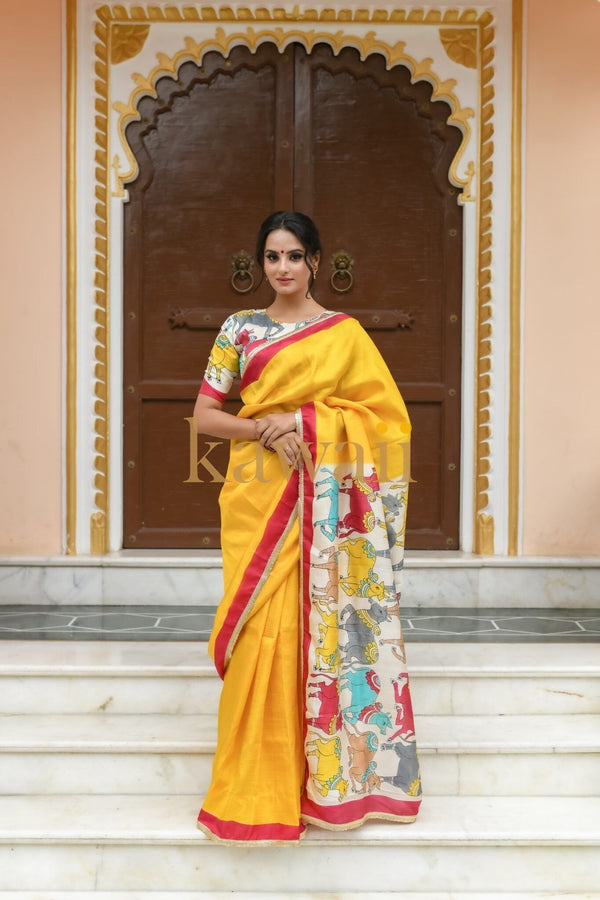
Handpainted 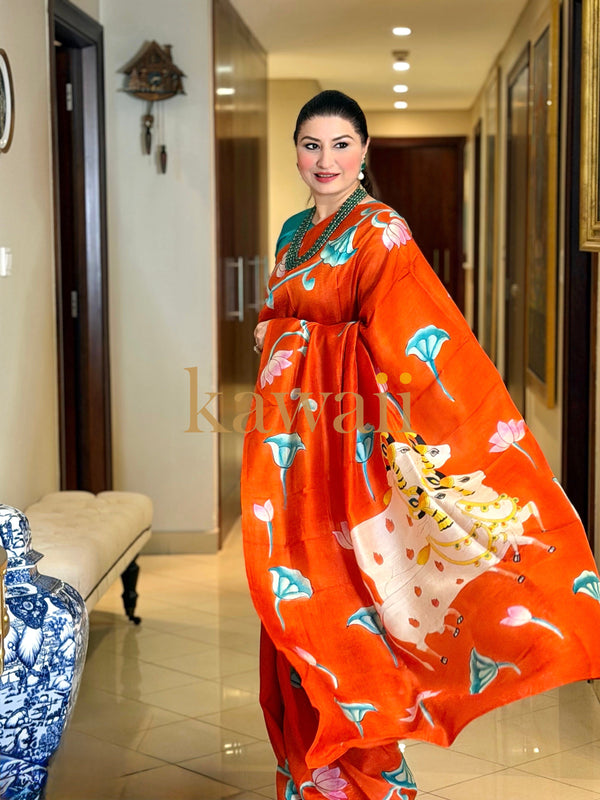
Handpainted 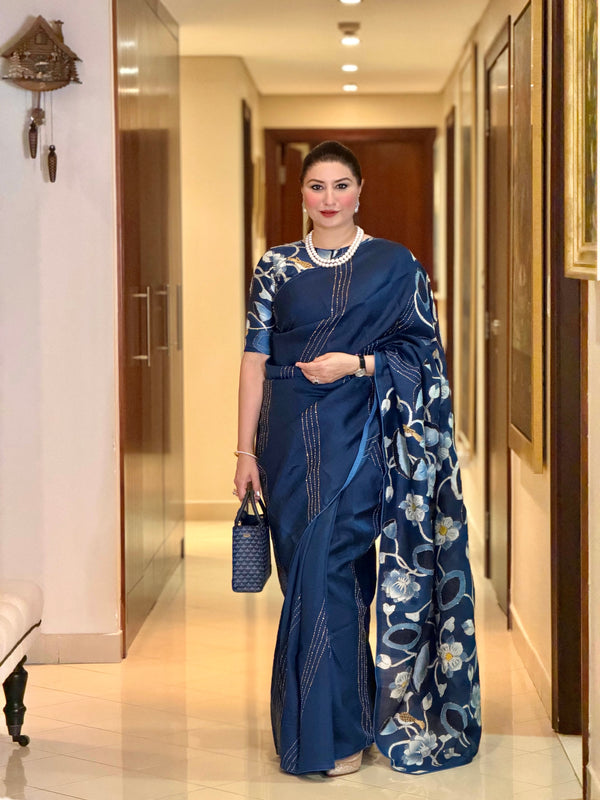
Ready to Ship 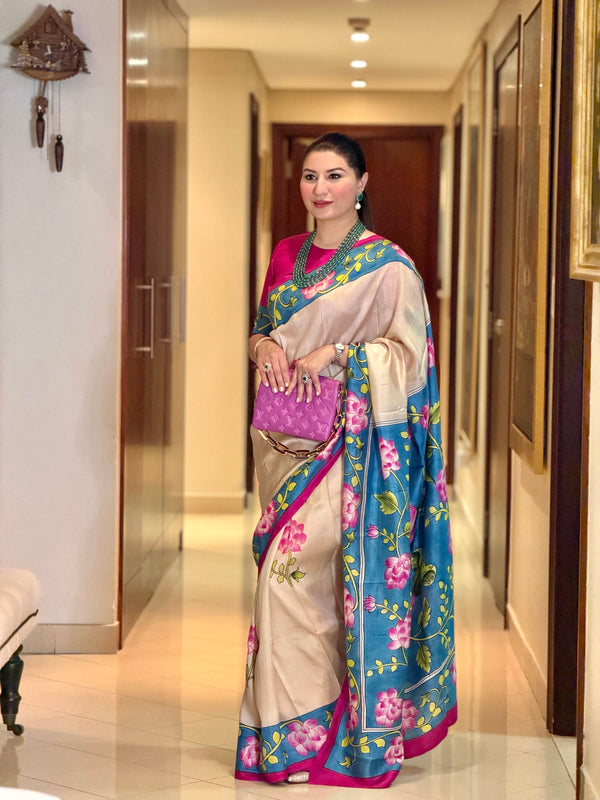
Ready to Ship 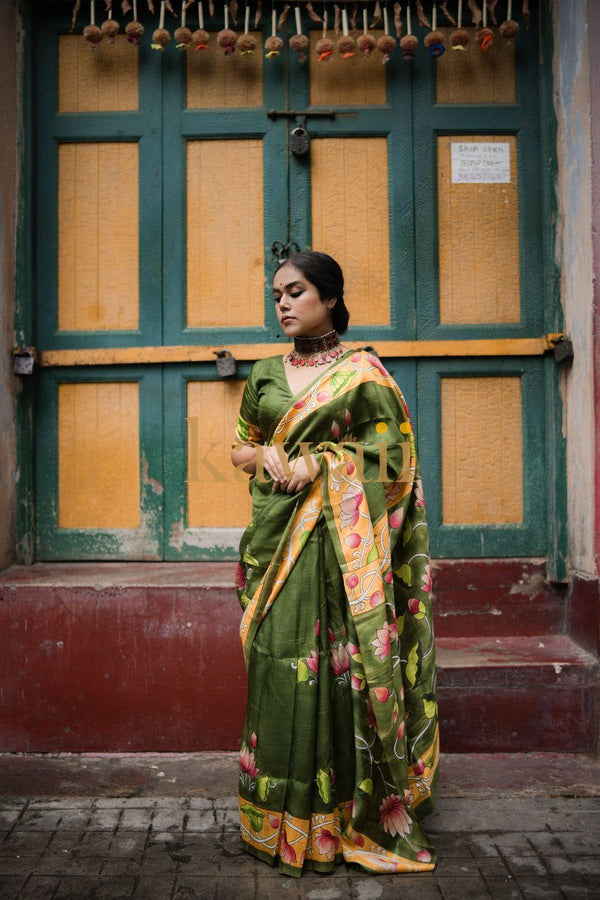
Ready to Ship 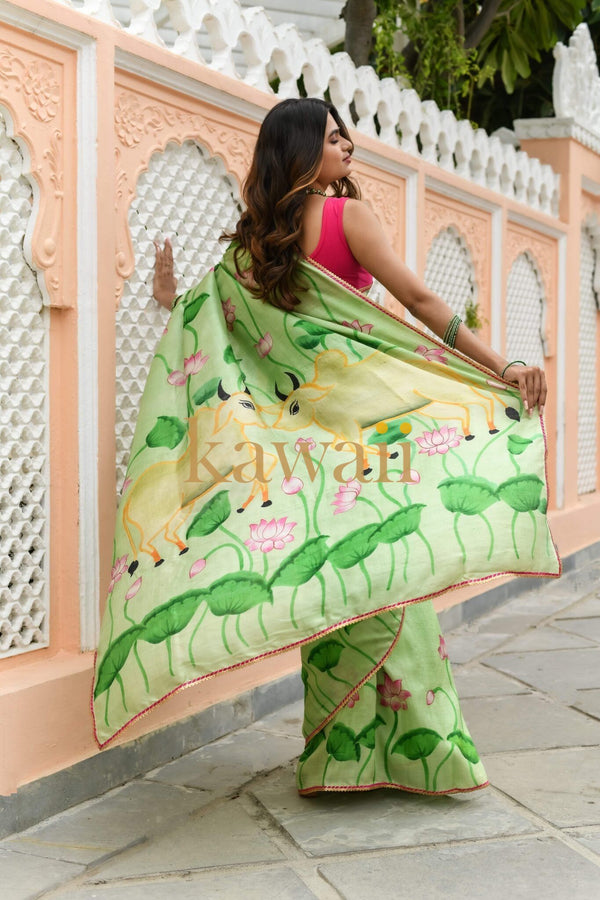
Ready to Ship 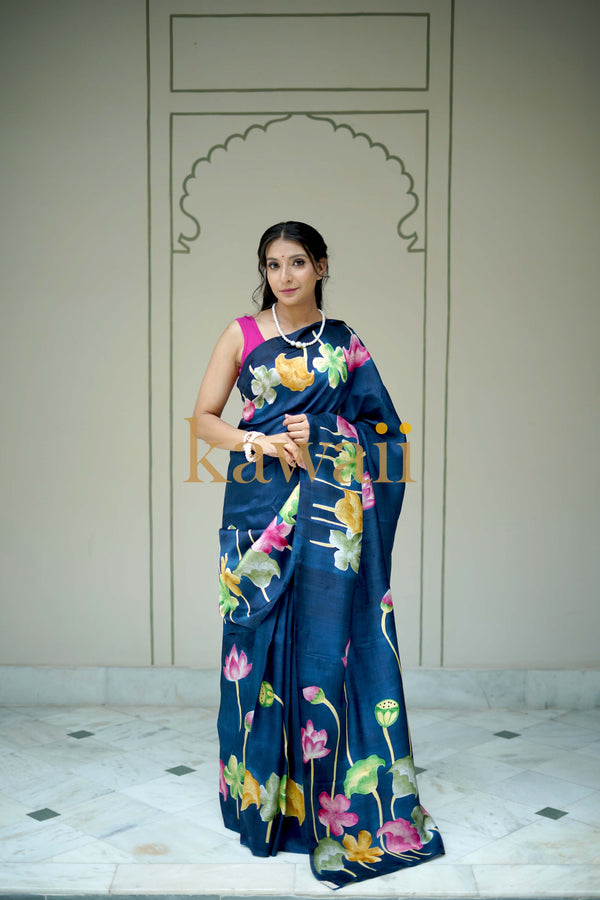
Pichwai Certified 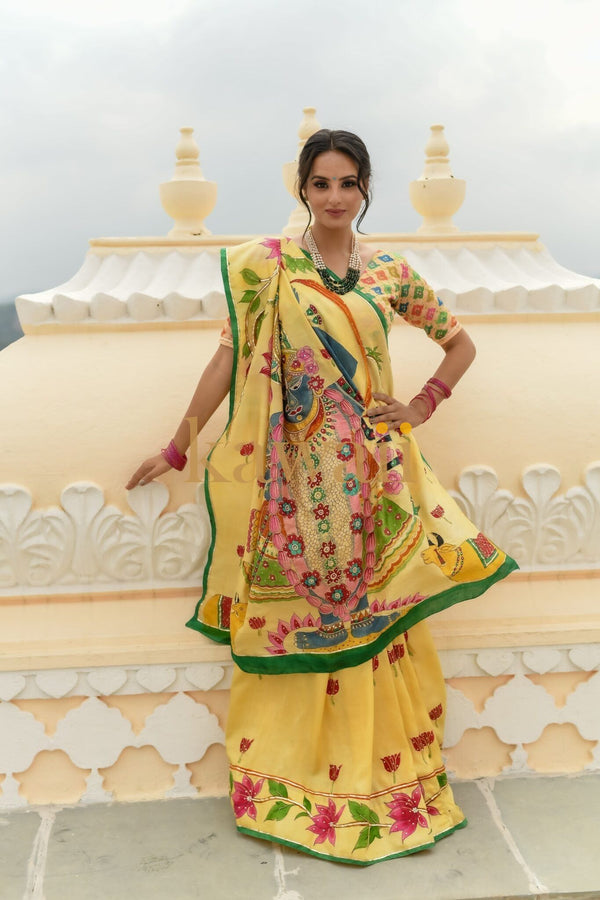
At Kawaii, Pichwai art is not treated as a passing trend. We work with artisans who understand the tradition behind every motif, and our pieces are created to honour the heritage of Nathdwara while still feeling relevant for today's wardrobe, whether that is a wedding, a festive evening, or a cultural celebration.
Our collection is built around the idea that a Pichwai saree should feel like a piece of art you can wear, not just a print picked for its colour palette. Each design in our range carries its own personality, and many are even named after the artists or the stories behind the artwork.
Here are a few pieces from our Pichwai collection worth exploring.
The Chitra Pichwai Saree is crafted on handloom silk, with detailed motifs that capture the richness of traditional temple art in a wearable, everyday luxury format.
The Rumi Handpainted Pichwai Saree is exactly what it sounds like: a fully hand painted piece, where every brushstroke has been done by an artist rather than printed, making it a true collectible.
For those drawn to intricate detailing, the Parnika Handpainted Pichwai Saree with Kantha Work combines hand painted Pichwai art with traditional Kantha stitching, bringing together two different craft traditions in one saree.
The Roha Pichwai Saree and the Noor Pichwai Saree are both popular choices for festive wear, with motifs that lean into the classic lotus and floral imagery associated with the art form.
The Ameya Handpainted Pichwai Saree and the Jheel Pichwai Saree showcase how the same temple inspired artwork can be styled in completely different colour stories, from earthy greens to deep blues.
For occasions that call for something more elaborate, the Ananta Pichwai Saree and the Vijaya Pichwai Saree are crafted on handloom silk with detailed pallu work, designed to stand out at weddings and bigger celebrations.
And for those who want the most premium expression of this art form, the Shreenathji Handpainted Pichwai Saree is one of our most detailed pieces, directly inspired by the temple imagery of Shrinathji himself.
You can explore the complete range on our Pichwai Sarees collection, where every product listing includes details on the fabric, technique, and craftsmanship behind the piece, so you know exactly what you are bringing home.
Final Thoughts
A Pichwai saree is far more than a trend in ethnic fashion. It is a wearable continuation of a temple art tradition that has lived in Nathdwara, Rajasthan for centuries, and it carries meaning in every motif, from the lotus to the peacock to Krishna himself. Understanding where this art comes from, how it connects to India's silk weaving traditions, and what separates an authentic piece from a generic print can help you make a more informed choice the next time you shop for one.
At Kawaii, our goal is to keep this art form alive in a way that feels honest and rooted in craft, while still being something you genuinely want to wear. If you are looking to add a piece of this heritage to your own wardrobe, our Pichwai saree collection is a good place to begin.


